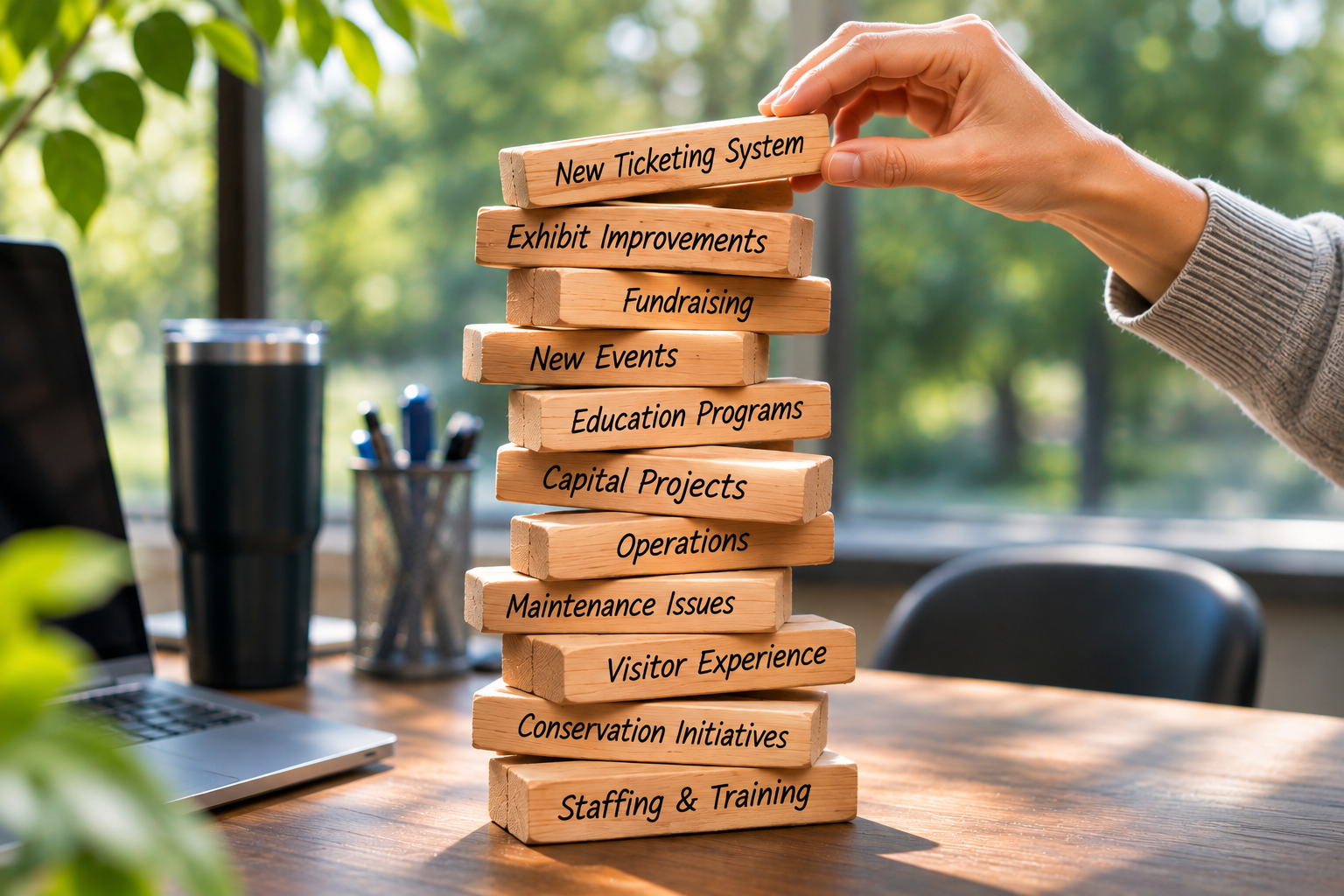
Burnout rarely starts with one dramatic moment. More often, it builds slowly as organizations add one reasonable priority after another without taking enough work away.
A zoo launches a new seasonal event. An aquarium expands education programming. An attraction rolls out a new ticketing platform while preparing for a capital project.
Each initiative may make perfect sense on its own. But the strain shows up when all of them have to be delivered by the same people, at the same time, with the same limited resources.
And that's where even the best intentions can start working against each other.
Look at the Workload Before You Blame the Culture
When teams are stretched thin, the conversation often turns to morale, communication, leadership, or workplace culture. Those things matter. But they are not always the root cause.
Sometimes the underlying issue is that the organization has committed to more work than its people, money, and time can realistically support. And that overload doesn't stay neatly inside one department.
A new event creates more work for operations, marketing, facilities, food service, guest services, security, finance, and leadership. A new initiative may appear small on paper while creating hours of coordination and follow-up across the organization.
The challenge becomes even greater when an organization is working from multiple plans. A strategic plan identifies new priorities. A master plan introduces capital projects. Departments develop their own goals, while day-to-day operations continue demanding attention.
Each plan may be well thought out, but who's looking at what happens when they all compete for the same resources?
That's how "everything is a priority" becomes the operating model.
Capacity Problems Leave Clues
Most organizations can see signs of overload if they know where to look.
Projects miss deadlines more often. The same department becomes a bottleneck across several initiatives. Overtime rises. Training, maintenance, and planning work keep getting pushed aside by immediate demands. Leaders are pulled into more projects, but progress keeps slowing down.
Those aren't just productivity problems. They may be signs that the organization has exceeded its practical capacity.
A useful way to test that is to put your major priorities in one place and look at the load across them. For each initiative, identify:
Who owns it?
Which teams support it, and what else is currently on their plates?
How much staff time does it require?
What funding or outside support is available?
Which other initiatives depend on it or compete for the same resources?
What has to slow down, stop, or move if this remains a priority?
The pattern often becomes obvious once the work is visible. What looked like separate projects may actually be competing demands on the same people and resources.
Sometimes the Real Decision Is What Not to Do
Protecting capacity doesn't mean lowering ambition. It means making thoughtful decisions about what matters most and sequencing the work so the organization can actually deliver it well.
Sometimes the answer is more staff or more funding. Sometimes it's changing the timeline, reducing scope, pausing an initiative, or recognizing that a good idea isn't necessarily the right idea right now.
At Monumental Strides, this is a big part of how we approach Planning and Implementation Support. We help organizations connect the dots between their vision, strategic priorities, capital plans, and day-to-day operations so leaders can see the full picture, understand where resources are stretched, and make informed decisions about what moves forward and when.
Because the goal isn't simply to get more done. It's to make meaningful progress on the things that matter most, without asking the same people to do everything at once.
Big visions need more than good ideas. They need coordinated plans and the capacity to make them happen.