Your 2026 Plan Looks Great. Can Your Team Actually Execute It?
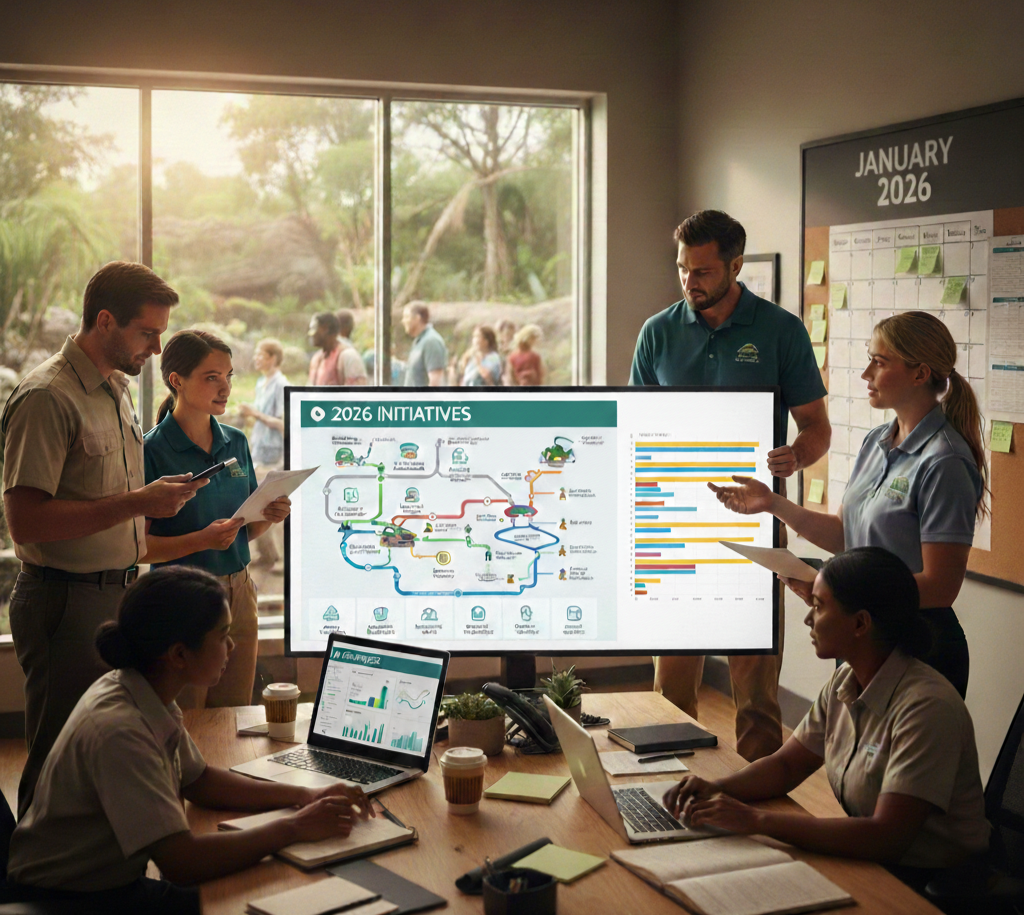
A new year brings fresh energy, ambitious goals, and—if we’re honest—a lot of pressure to make big things happen fast. For zoos, aquariums, attractions, and experience-based nonprofits, that pressure often comes with added layers: fluctuating attendance and revenue, staffing challenges, accreditation standards, and stakeholders asking for measurable impact.
Before you charge into 2026, it’s worth pausing to ask one simple (and important) question: Are you and your team truly set up to execute your plan?
Use this 2026 Readiness Checklist to make sure your plan doesn’t just look good on paper—but actually drives meaningful outcomes when December rolls around.
-
Intentional Direction
Do you have a focused roadmap for 2026 that supports your long-term vision, or are you spending most of your effort reacting to what feels most urgent right now? -
Clear Communication
Is the plan clearly communicated across the organization? If you asked leaders, frontline teams, and operations staff what matters most this year, would you hear the same answer? -
Prioritized Initiatives
Are your strategies prioritized with clear quarterly goals and metrics—or does everything still feel “important,” even when time and capacity say otherwise? -
Defined Ownership
Does everyone know what they own—and how their work contributes to the bigger picture? Clear accountability is what turns plans into progress. -
Measured Progress
Do you have dashboards or scorecards that track the right metrics—attendance, per caps, ROI, experience quality, mission impact—and make progress visible to teams and leadership? -
Healthy Rhythms
Are you meeting regularly to review progress, identify issues early, and problem-solve together—before confusion or operational fires slow execution? -
Aligned Resources
Have you honestly assessed whether you have the staff, skills, systems, and budget needed to deliver on this year’s priorities—or are new initiatives expected to “fit in” on top of everything else?
Here’s the truth: success in 2026 won’t come from working harder. It comes from clarity, alignment, and systems that help teams stay focused when inevitable distractions pop up.
If this checklist surfaced a few gaps, that’s not a failure—it’s an opportunity. The organizations that succeed aren’t perfect planners; they’re intentional builders. And that’s where real progress begins.